
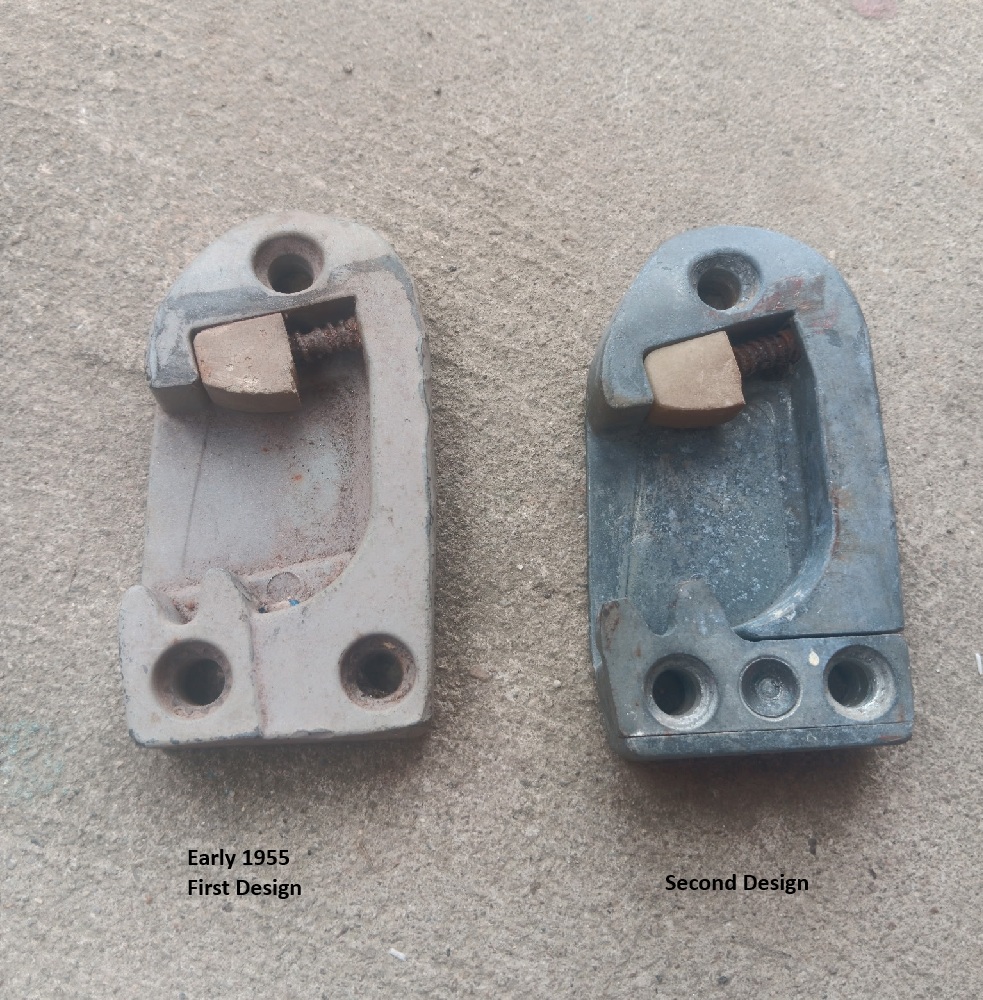
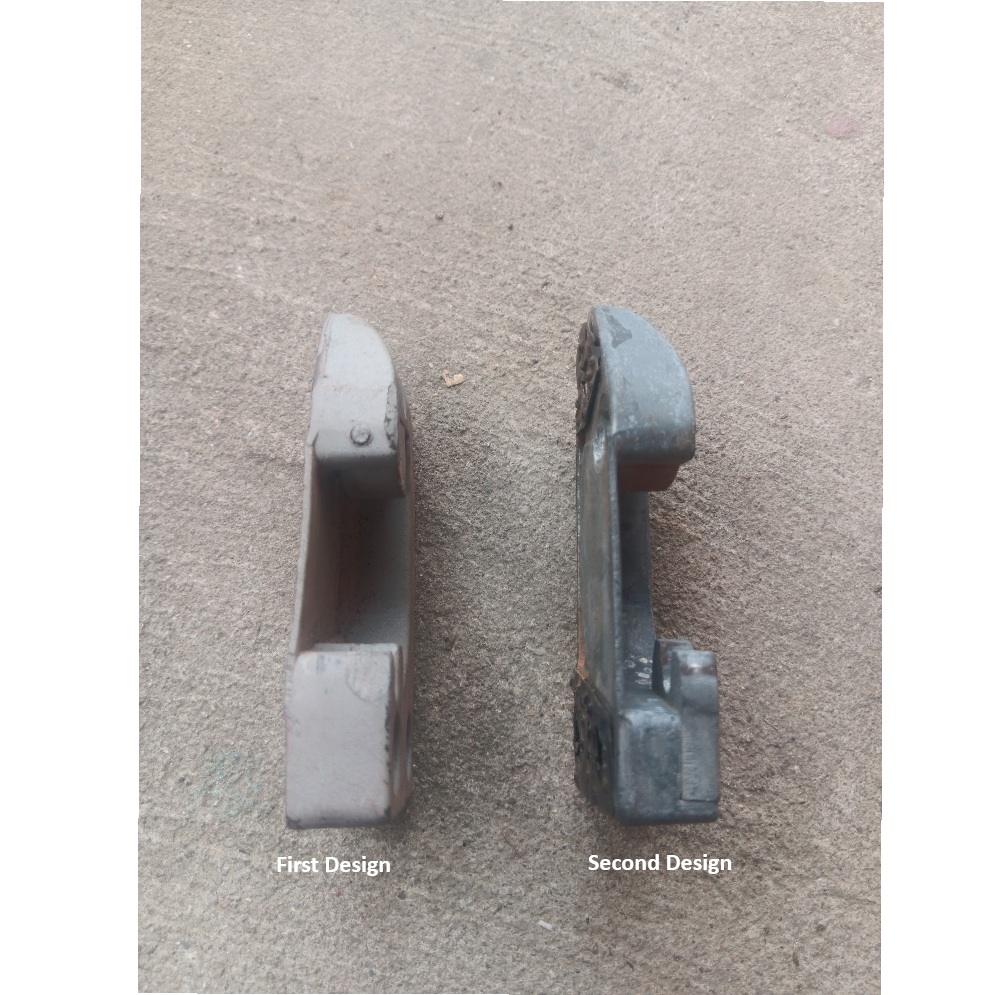
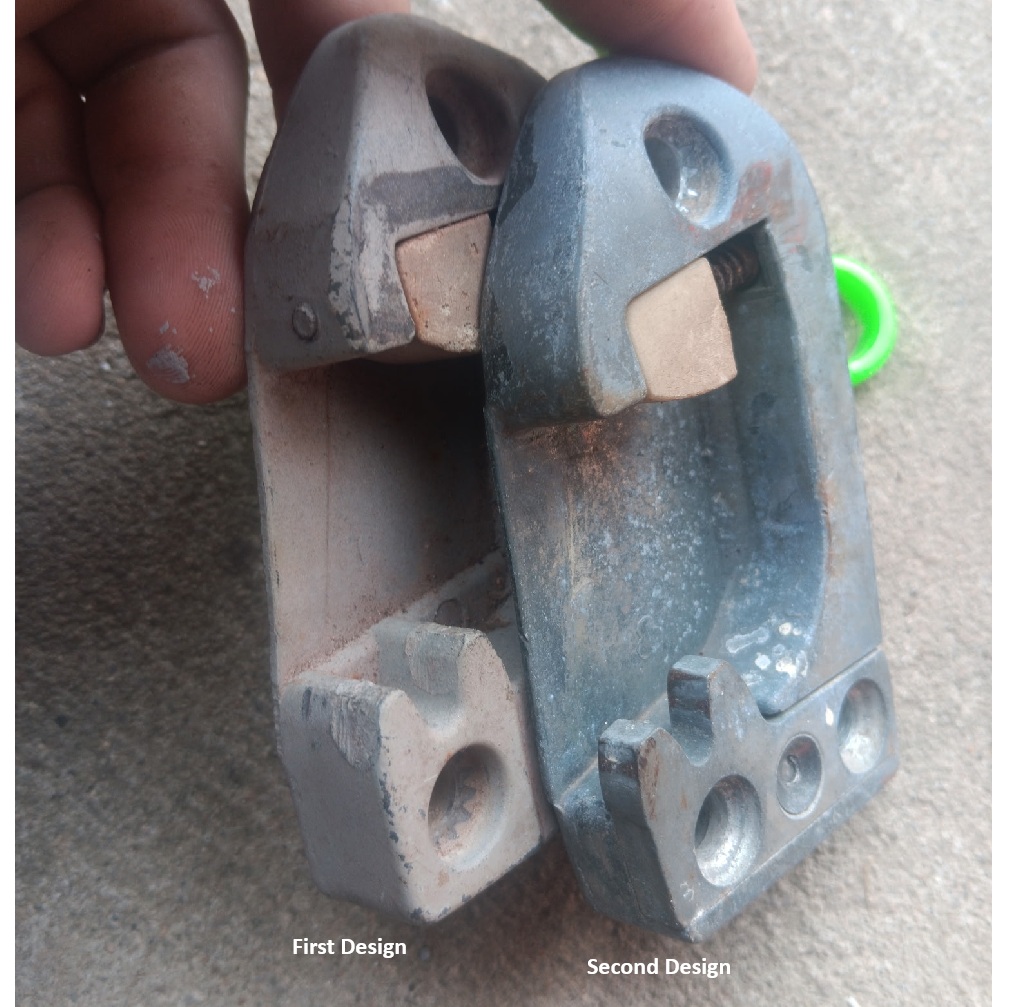
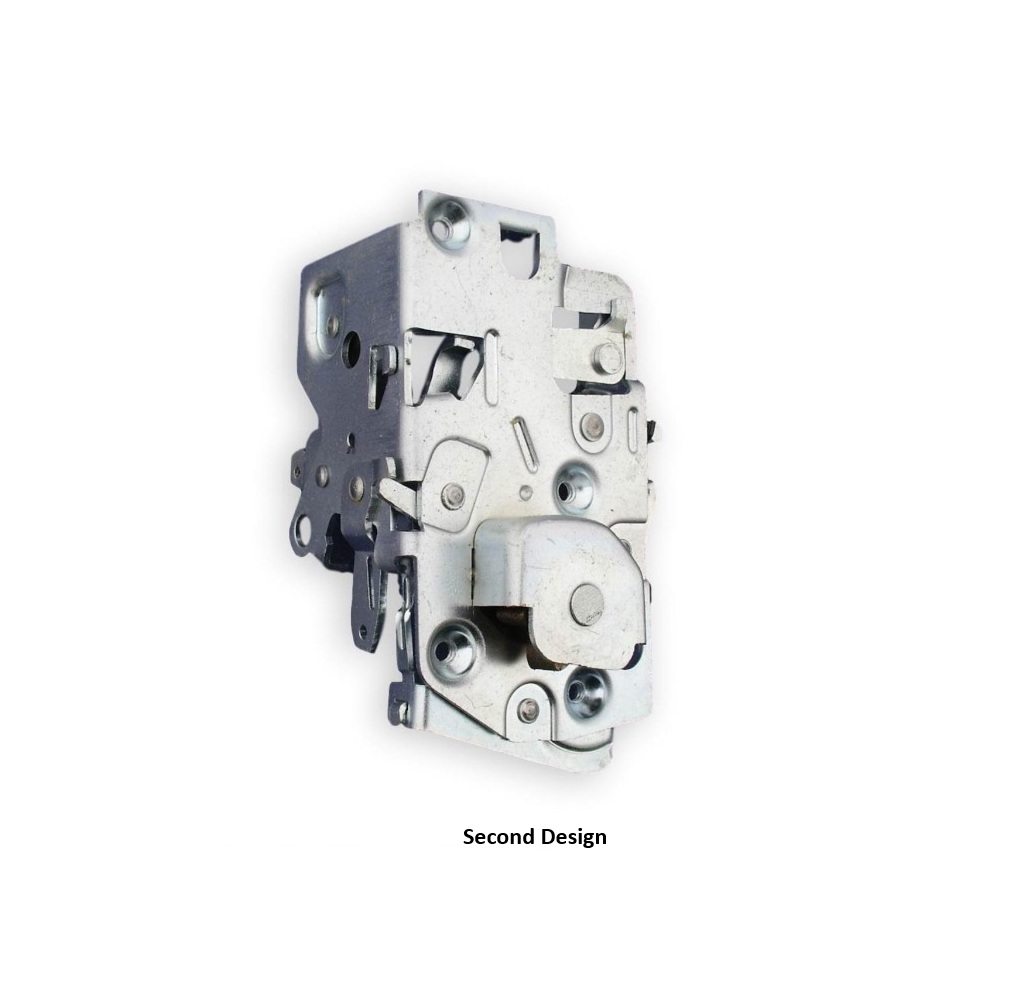
On the 1955 Chevrolet passenger cars (not the trucks), there are early-production and late-production door latches and strikers. This change was made during the model year because Chevrolet found problems with the original design in everyday use and made an engineering improvement rather than waiting until the 1956 model year.
Early 1955 latch and striker
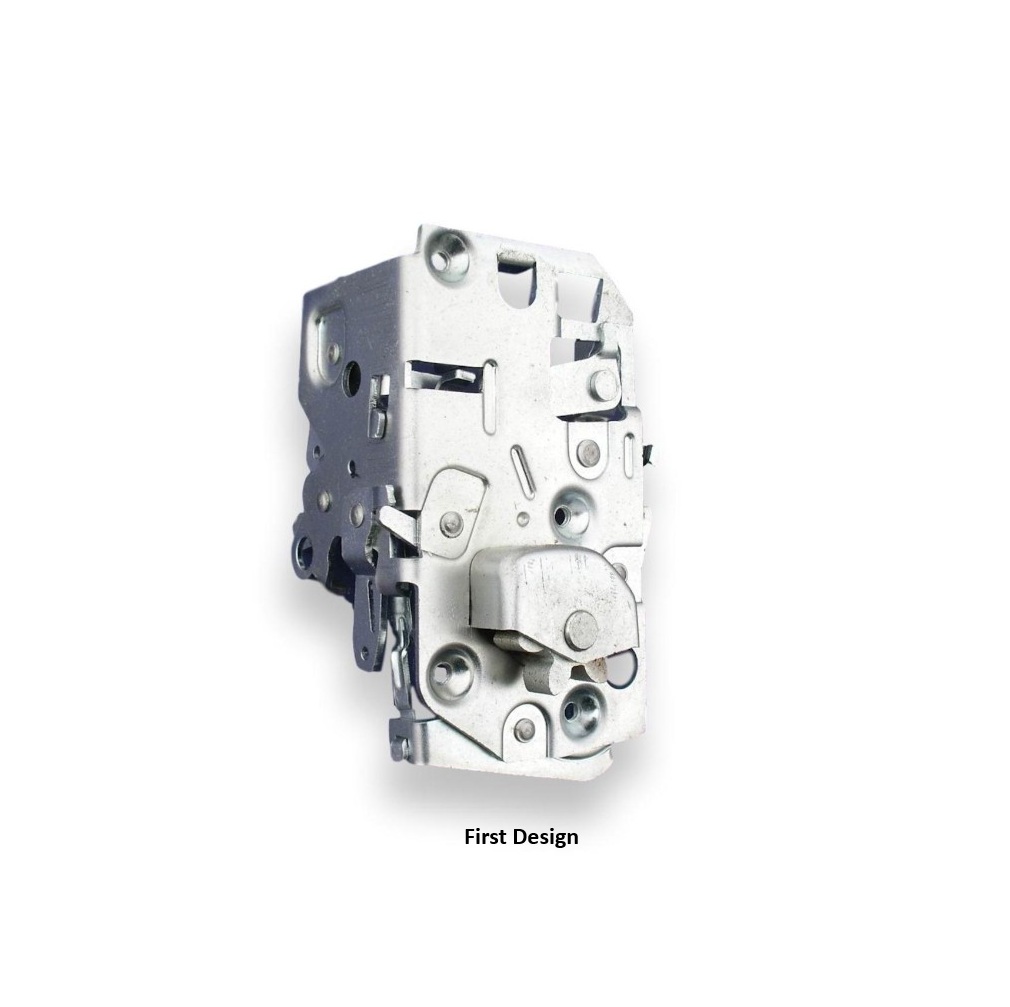
The early cars used a rotary latch with a matching wedge-shaped striker. While it worked well when everything was adjusted correctly, it had several shortcomings:
- The door was more sensitive to alignment.
- As the latch and striker wore, the door could develop rattles.
- Closing effort was somewhat higher.
- In some cases the latch would not fully engage if the door was only partially closed.
Was the early latch prone to opening in a crash?
The answer is yes, compared with the later design—but that was also true of many cars of the early 1950s.
The early latch could release if:
- the door or body structure deformed significantly,
- the striker moved relative to the latch during impact,
- or the latch experienced a severe side load.
The early latch has a relatively shallow engagement. During a severe side impact, if the door and B-pillar moved relative to each other, the striker could push the rotary jaw toward the release position.
This wasn’t unique to Chevrolet. Many American cars built before the widespread adoption of modern “safety” latches had similar vulnerabilities.
Late 1955 latch and striker
Around the middle of the 1955 production year, Chevrolet introduced a redesigned system with:
- A revised rotary latch mechanism.
- A different striker plate with a changed profile.
- Stronger internal springs and improved engagement geometry.
The revised design:
- Closed more smoothly.
- Held the door tighter against the weatherstrip.
- Reduced rattles.
- Was less likely to release from body flex or wear.
- Required less frequent adjustment.
This improved design became the basis for the 1956-57 latch system.
Late latch Chevrolet added the cover plate (retainer plate) over the rotary jaw. The teeth are hidden behind this stamped plate, leaving only the working portion of the jaw visible through the opening. This is one of the easiest ways to identify the late design at a glance.
The late-1955 redesign made accidental unlatching less likely by providing:
- deeper engagement between the latch and striker,
- a more positive secondary catch,
- better resistance to side loading,
- and improved retention if the body flexed during an impact.
The early latch is designed to work only with the early striker, and the late latch only with the late striker. If you mix an early latch with a late striker (or vice versa), the door usually won’t latch correctly or will be difficult to close.
When restoring a car, both pieces should be changed as a matched set.
How to identify them
A quick visual check usually tells the difference:
- Early 1955 striker
- Solid one piece design
- Late 1955 striker
- Two piece design with notch
Latches are easy to tell , Early version have exposed teeth, later version have a cover plate of the rotary jaws
Why Chevrolet changed it
The change was part of GM’s normal engineering improvement program. During the first months of production, dealers reported complaints involving:
- doors that rattled,
- doors requiring excessive force to close,
- frequent latch adjustments, and
- premature wear.
Rather than waiting for the 1956 model year, Chevrolet issued a running production change to improve durability and customer satisfaction.
Chevrolet revised the design to improve door retention, durability, adjustment, and overall performance, with improved crash resistance being one of the benefits rather than the only reason for the change.
Restoration advice
If you’re restoring or driving a 1955 Chevrolet regularly:
- The late-1955 latch and striker are generally considered the better and safer choice.
- If your car has the early system and the parts are worn, many restorers convert to the late-1955 or 1956–57 matched latch-and-striker set.
- The conversion is largely bolt-on, provided you replace both the latch and the striker as a matched pair.
Retro-Gear makes a Polished CNC 304 Stainless version of the door Strikers (https://retro-gear.com/product/19551957-chevrolet-door-strikers-polished-stainless)