Discover how we recreate rare and discontinued components for Tri-Five cars. The process combines traditional craftsmanship with modern tech.
Selecting the proper metal for any component is a critical part of our design and manufacturing process. Each material choice affects durability, appearance, cost, and long-term performance. When deciding which metal to use, we evaluate several key factors.
How We Select Materials
1. Original Construction
We begin by examining the original part—specifically, what material was used when it was first manufactured.
2. Modern Improvements
We consider whether a better solution exists today than what was available in the 1950s when the original part was produced.
3. Production Volume
How many parts will be made? The ideal material and manufacturing process can vary significantly between low-volume and high-volume production.
4. Performance Enhancements
Can an alternative material improve durability, appearance, or service life while still preserving the original design intent?
5. Cost and Manufacturing Impact
How does the choice of material affect the final selling price when combined with different manufacturing methods?
6. Finish and Appearance Requirements
Will the part be polished, plated, anodized, or coated? The intended finish can significantly influence material selection as well as long-term appearance.
7. Service Environment and Wear Conditions
Will the part be exposed to moisture, heat, friction, or repeated contact? Understanding the service environment helps ensure the correct balance of durability and longevity.
With these considerations in mind, the following example illustrates how material selection decisions are applied in practice—balancing originality, modern manufacturing methods, durability, appearance, and long-term performance.
Example: 1957 Chevrolet Hood and Trunk Vees
The original 1957 Chevrolet hood and trunk vees were die-cast using zinc alloy, commonly referred to as pot metal. This material allowed for sharp details and crisp edges, making it well suited for decorative trim. However, pot metal has a well-documented drawback: over time it can pit, swell, blister, and eventually crumble as corrosion progresses.
Many modern reproductions have attempted to replicate these parts using either die casting or thin stamped and formed metal. While functional, these approaches often fail to address long-term durability concerns.
Our goal was to produce a superior alternative. For that reason, we chose to CNC-machine the hood and trunk vees from billet aluminum. Unlike pot metal, billet aluminum does not deteriorate, swell, or corrode in the same manner, resulting in a longer-lasting, higher-quality component.
Stainless Steel for Trim Components
For most trim applications, we use 304 stainless steel, which is widely regarded as the best all-purpose stainless alloy for automotive use. It offers an excellent balance of corrosion resistance, strength, and formability.
304 stainless steel typically contains approximately 18% chromium and 8% nickel, making it highly resistant to rust, non-magnetic, and well suited for exposed trim components.
Typical Alloying Elements in Stainless Steel
-
Nickel – Stabilizes the austenitic structure, improves formability and ductility, enhances high-temperature strength, and increases corrosion resistance.
-
Silicon – Improves scaling resistance and resistance to carburization at elevated temperatures.
-
Manganese – Enhances hot-working properties, increases yield and tensile strength, partially replaces nickel, and stabilizes the austenitic structure.
-
Molybdenum – Improves corrosion resistance, particularly in saltwater and chemical environments, increases strength at elevated temperatures, and reduces pitting.
-
Titanium, Columbium (Niobium), and Tantalum – Prevent intergranular corrosion by stabilizing carbon, refine grain structure, and improve forming characteristics.
-
Sulfur, Phosphorus, and Selenium – Added in small amounts to improve machinability.
-
Additional Chromium – Increases wear resistance, scaling resistance, and corrosion protection.
Billet Applications
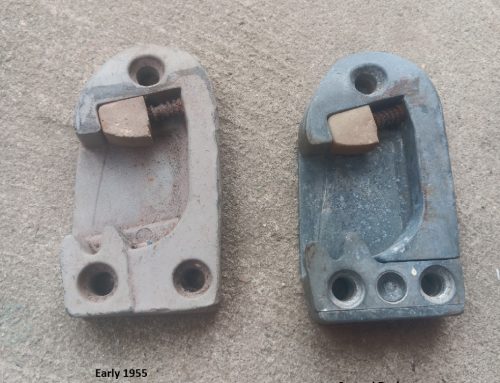
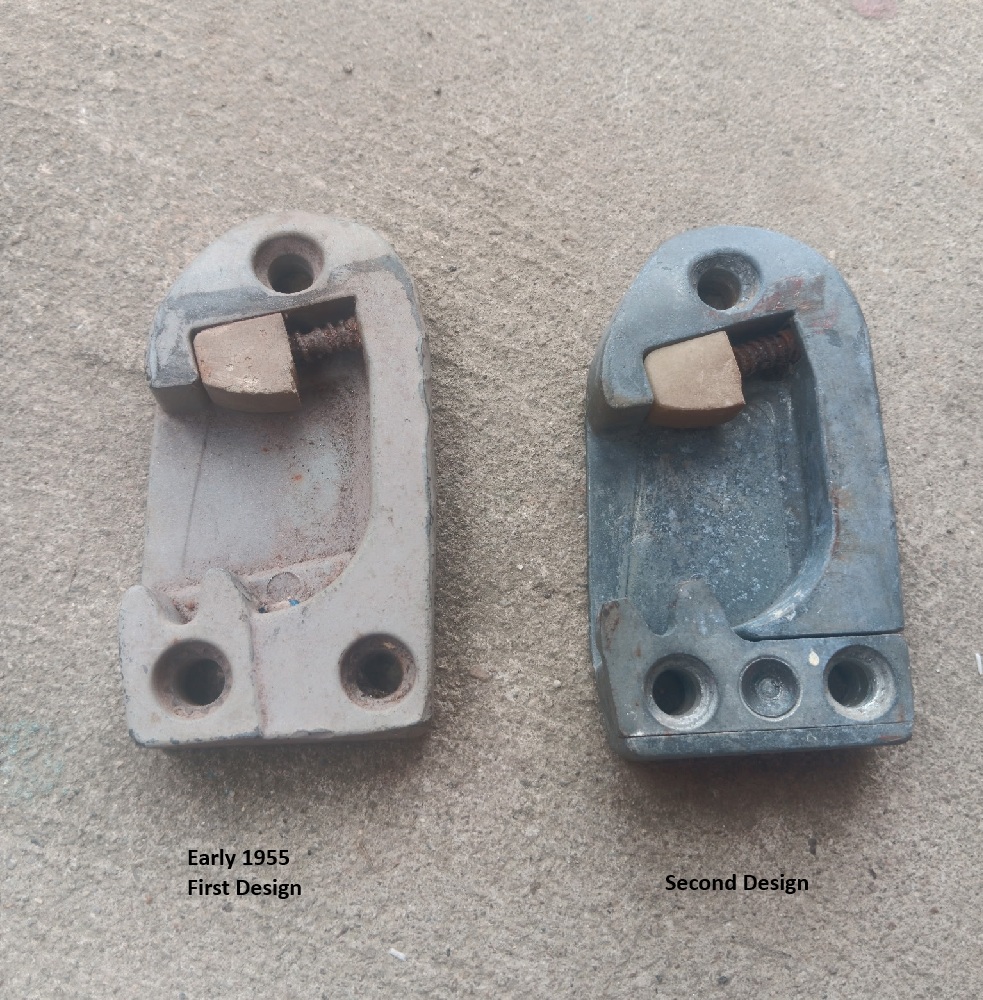
For parts that experience regular contact or wear—such as door strikers and tailgate guides—we use billet 304 stainless steel due to its hardness and excellent wear characteristics.
Other components, including 1957 bumper bullets, select fender louvers, and tailgate hinges, are machined from billet aluminum. While this approach carries a higher production cost, it results in a stronger, longer-lasting product.
A final step for all of our billet and molded products is precision high polishing. This ensures that once the final finish (if required) is applied, the part achieves a true show-quality appearance.
Zinc Alloy Applications
Zinc alloy is still used today for certain molded components, such as 1957 Chevrolet dash bezels. These parts feature small, complex shapes that are not cost-effective to produce using CNC machining. In these cases, zinc alloy is injected into precision molds to accurately reproduce the original design.
Conclusion
By carefully matching each part to the most appropriate material and manufacturing process, we ensure every component delivers the best balance of authenticity, durability, and value—whether intended for a concours-level restoration or a driver built to last.